BioStart Biomanufacturing Foundations
Online course library
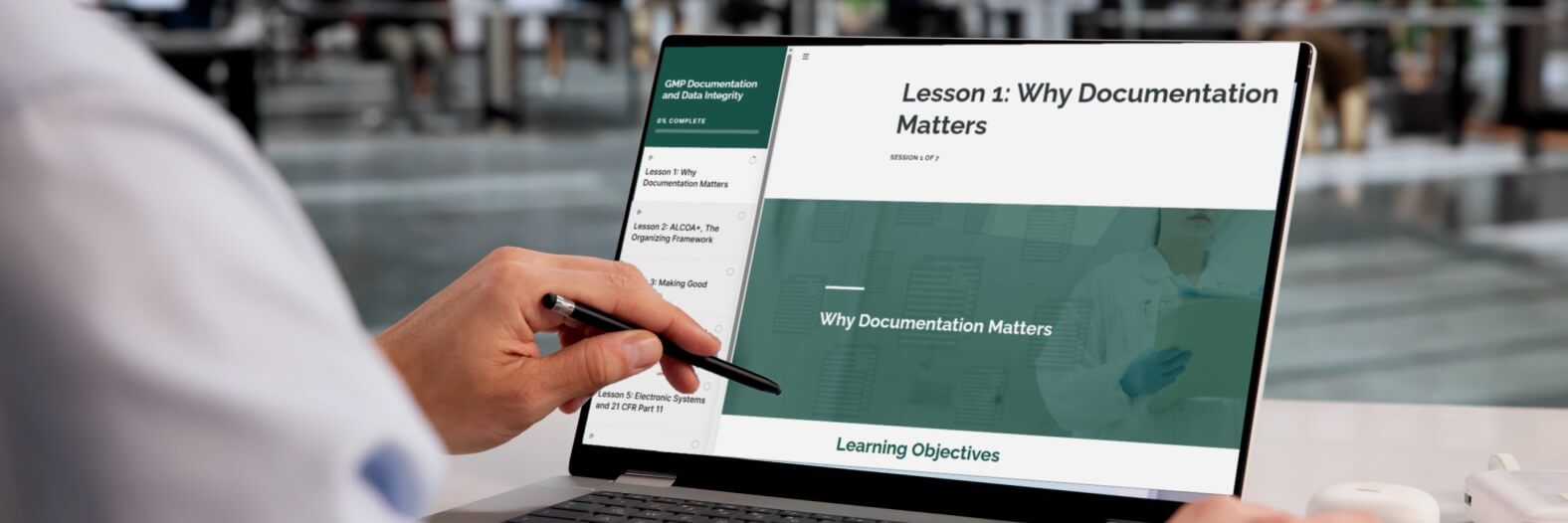
Self-paced online courses that build the theory, industry knowledge, and core concepts behind biomanufacturing work. Designed to supplement hands-on training for new production or quality control technicians.
At a Glance
- 11 self-paced online courses, about 24 hours of learning in total
- Four topic areas: Industry and Company Context, Manufacturing and GMP Core, Science and Math Foundations, and Quality and Continuous Improvement
- Learn at your own pace
The Course Library
Industry & Company Context
How companies form, scale, and work across R&D, quality, manufacturing, and regulatory functions, plus the partners that matter.
How a life sciences company forms and grows, from founding and funding through its core functions, cross-functional teams, and key external partners such as regulators, CROs, and CDMOs.
Manufacturing & GMP Core
Daily production work in a regulated environment: GMP, SOPs, data integrity (ALCOA+), and cleanroom contamination control.
A practical orientation for new operators and technicians: upstream and downstream processing, process monitoring (CPPs and CQAs), equipment qualification, shift handoffs, materials traceability, maintenance, and production records.
Why the industry is regulated, the FDA's authority and key regulations (21 CFR Parts 210, 211, and 820), how GMP compares with GLP and GCP, what an FDA inspection involves, and each employee's role in quality.
How to read, navigate, and follow an SOP exactly, use controlled documents correctly, and respond when a situation doesn't match the procedure, including deviations and change control.
What makes GMP records trustworthy: ALCOA+ principles, correct entries and error corrections, second-person review, paper and electronic records, and the basics of 21 CFR Part 11.
Types and routes of contamination, how facility design controls them, cleanroom classifications (ISO 14644-1 and GMP Grades A to D), gowning, and cleaning, sanitization, and sterilization.
Science & Math Foundations
The biology and chemistry behind the process, and applied math for the floor: unit conversions, dilutions, and QC statistics.
A primer on the biology and chemistry behind biomanufacturing, from chemistry and cell biology to molecular biology, microbiology, immunology, and analytical techniques, with workplace context throughout.
Applied math taught through workplace scenarios: metric conversions, scientific notation, significant figures, reading instruments against specifications, dilutions (C1V1 = C2V2), and basic QC statistics.
Quality & Continuous Improvement
Risk-based thinking, CAPA, Lean tools like 5S, and DMAIC problem solving with root cause analysis.
The reasoning behind SOPs and records: key quality standards (ISO and ICH Q9(R1)), risk-based thinking, sources of variation, preventive controls, the duty to report, CAPA, and the State of Control.
A plain-language introduction to Lean with life sciences examples: customer value, the eight wastes, process and value stream mapping, pull and kanban, 5S, mistake-proofing, and Kaizen events.
From the PDCA cycle to DMAIC: what Six Sigma means, Voice of the Customer, defining a problem, root cause analysis (Five Whys and fishbone diagrams), and control plans and charts.
Every Course Includes
- Clear learning objectives
- Interactive activities
- Assessments
- Progress tracking
- Learn at your own pace
Built with Industry
Learning objectives are shaped by employer feedback on what new team members need to know. Courses are developed with subject matter experts and professional instructional designers.
New & Noteworthy
Join our e-mail list
Get the latest Oregon Life Sciences communications delivered to your inbox. Includes events, news, members benefits, and more.
Announcing Rad Lab
Explore life science careers with Rad Lab, a free-to-play game for ages 13-24. Learn vital skills and discover career opportunities in Oregon's life science sectors.
Oregon Pavilion at BIO 2026
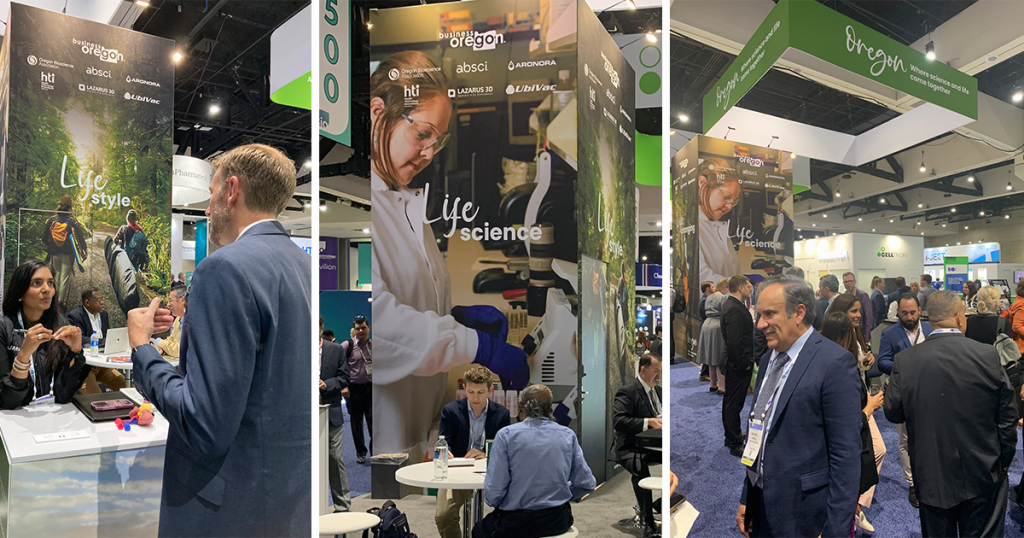
Join the Oregon Pavilion at BIO 2026, this coming June in San Diego! Connect with global biotech leaders. Learn how to partner today!